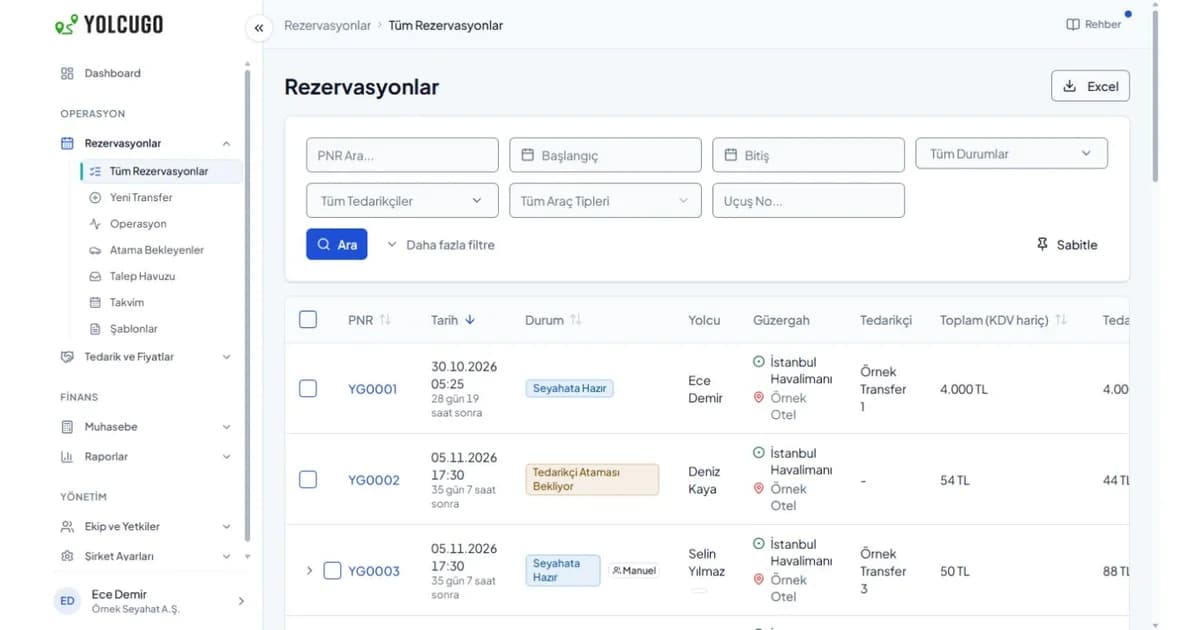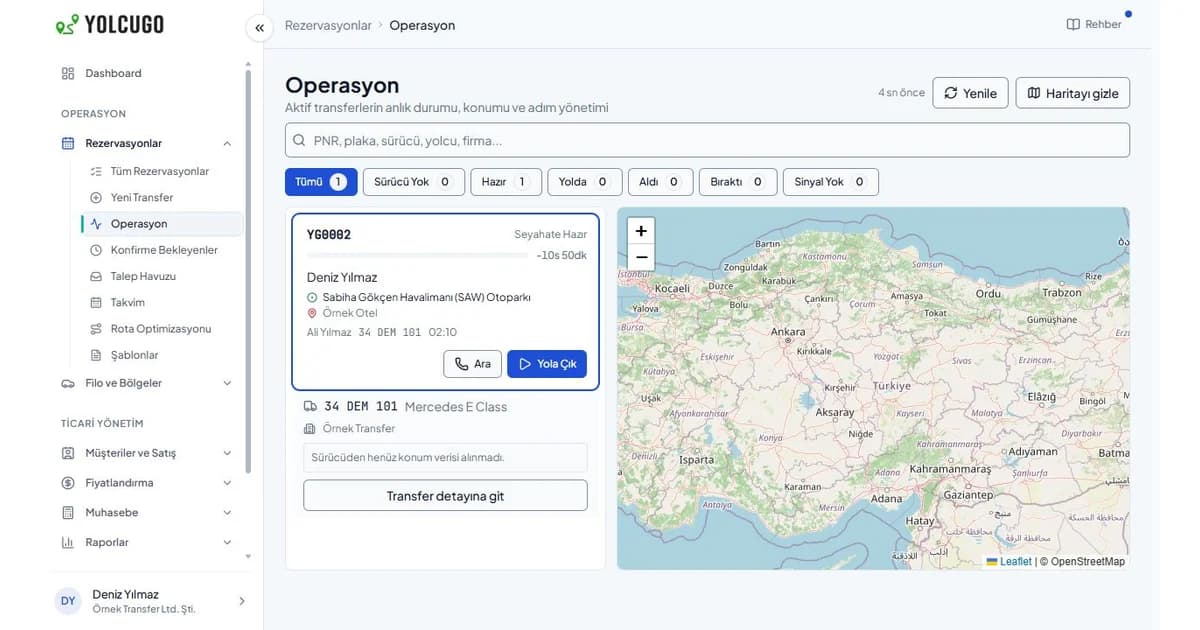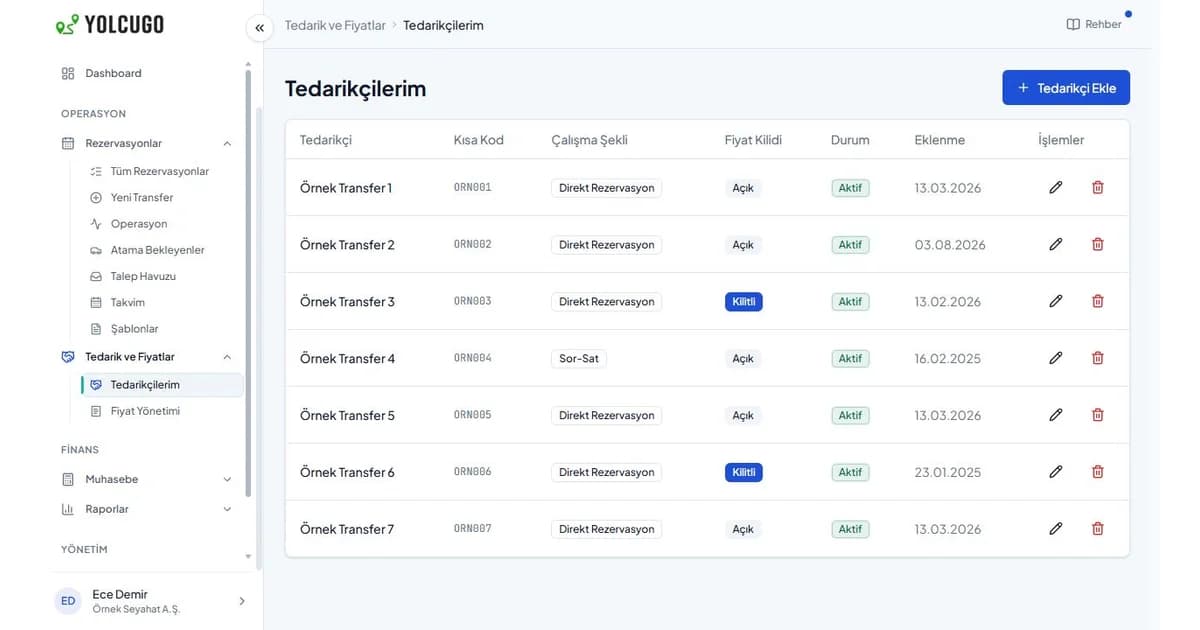
Transfer supplier management is one of the cornerstones of operational success for travel agencies and hotels. The right supplier selection, clear SLAs and continuous quality control directly impact guest satisfaction, cost efficiency and service reliability.
Why Supplier Management Matters
Transfer service is the first and last touchpoint of your guest's destination experience. A late vehicle, a dirty minivan or a rude driver can overshadow the entire holiday. Effective supplier management directly impacts three critical areas:
- Guest satisfaction: On-time, clean and professional transfers are the key to positive reviews and repeat bookings.
- Cost control: Comparing multiple suppliers lets you find the best price-performance balance.
- Operational reliability: Backup supplier plans and clear SLAs ensure service continuity even during last-minute cancellations.
Choosing the Right Suppliers
We recommend scoring supplier candidates on the following criteria:
- Fleet size and variety: Can they offer sedan, minivan, VIP and minibus options?
- Coverage area: Which airports and destinations do they serve?
- Insurance and licenses: Do vehicles have comprehensive and passenger insurance? Do they hold a tourism transport license?
- GPS and technology infrastructure: Can you track vehicles in real time?
- References: Current customer satisfaction rates and tenure.
Tip
Request a "test transfer" from supplier candidates. Experience the vehicle quality, driver behaviour and timing precision first-hand by living through a real customer journey.
Setting Up SLAs
Service Level Agreements (SLAs) form the written framework of your supplier relationship. A good SLA should cover:
- Response time: Maximum minutes to acknowledge a booking request.
- Vehicle condition: Minimum vehicle age, cleanliness standards, A/C and WiFi requirements.
- Driver standards: Dress code, language skills, meet-and-greet protocol.
- Cancellation and no-show policy: Penalty mechanism for last-minute cancellations and alternative vehicle supply time.
- Performance metrics: On-time arrival rate, complaint threshold and corrective action timeline.
Quality Control Methods
Signing the SLA is not enough; you need to build continuous measurement and feedback mechanisms:
- GPS-based tracking: Measure route deviations, waiting times and arrival punctuality with real-time location data.
- Driver scoring: Collect 1-5 star ratings from guests after each transfer.
- Customer feedback: Send automatic post-transfer surveys to continuously monitor service quality.
- Mystery passenger: Periodically arrange anonymous test transfers.
Important
You may not be able to drop an underperforming supplier immediately, but you can lower their score and move them to the backup category. This is critical for service continuity.
Multi-Supplier Strategy
Relying on a single supplier is an operational risk. A multi-supplier strategy allows you to:
- Preferred vs backup: Assign a primary and backup supplier for each route.
- Price lists: Keep up-to-date price lists per supplier on your platform; run automatic comparisons.
- Seasonal planning: Arrange extra capacity agreements for peak periods like summer season, public holidays and New Year.
Technology for Supplier Management
Managing suppliers via Excel and WhatsApp may work at small scale, but processes spiral out of control as you grow. A professional transfer management platform delivers:
- Automatic reconciliation: End-of-month invoice matching and payment tracking from a single screen.
- Performance dashboard: On-time rate, cancellation ratio and customer score per supplier at a glance.
- Instant quoting: Get and compare prices from multiple suppliers in seconds.
- API integration: Automatic data flow with supplier systems; manual entry errors drop to zero.
Conclusion
Transfer supplier management is not a set-and-forget task. It is a strategic process that requires continuous measurement, feedback and improvement cycles. With the right supplier selection, clear SLAs, regular quality control and technology-driven automation, you can optimise your transfer operations for both cost and quality. Platforms like YolcuGo enable you to manage all these processes from a single dashboard.