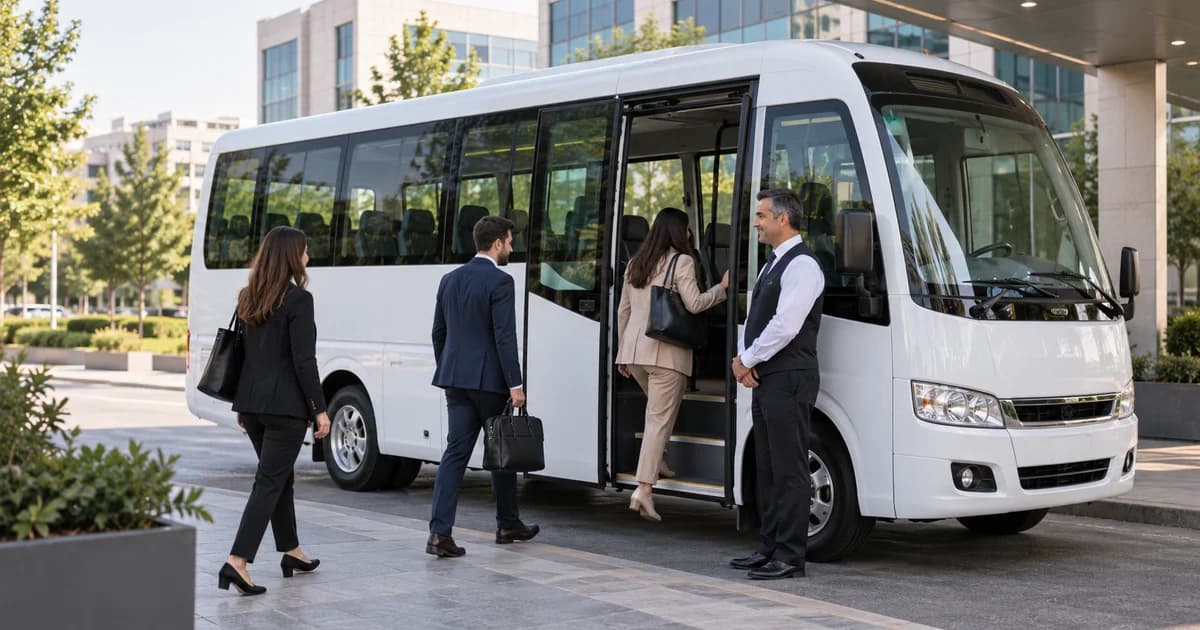
Employee shuttle services are one of the most fundamental operational needs for companies. When planned correctly, they reduce costs and boost employee satisfaction. When done poorly, absenteeism, tardiness and loss of motivation become inevitable.
What Is Corporate Staff Transport?
It is the process of organising regular commutes for employees to and from the workplace. This covers factory shuttles, office shuttles, shift-based transport and special-event transfers. Regardless of scope, the goal is the same: getting employees to work on time, safely and comfortably.
Benefits for the Business
- A visible reduction in employee absenteeism
- Consistency and predictability in arrival times
- Increased employee loyalty and satisfaction
- Reduced risk of commuting-related workplace accidents
- Stronger corporate image — especially during recruitment
Cost Analysis
A comparison in numbers
Professional staff transport can lower the per-person cost by 30–50 % compared to individual car use. Add in the savings on parking, fuel and vehicle maintenance, and the case is clear.
Legal Regulations
Key regulations to observe in staff transport:
- Obligations under Occupational Health and Safety legislation
- Highway Transport Act requirements and licensing obligations
- Tax advantages and deductibility options
- Mandatory insurance coverage
Route and Vehicle Selection
Creating digitally optimised routes based on employee addresses saves both time and fuel.
- Minibus (14–18 passengers): Ideal for short-distance, low-ridership routes
- Midibus (25–30 passengers): Medium-distance, high-density routes
- Coach (40+ passengers): Long-distance, high-capacity routes
What to Watch for in Contracts
- Service-level agreement (SLA) definitions and penalties
- Delay, cancellation and backup-vehicle clauses
- Insurance scope and liability sharing
- Price-revision periods and escalation caps